What to check in the translation
- Name and identity
- Full name as written, date and place of birth, identity numbers.
- Date, time and place of death
- Copy numbers exactly and spell out the month.
- Cause of death
- Medical terms need care. If you are unsure of a term, keep the original in brackets next to the translation.
- Informant and registrar
- Who reported the death and who registered it.
- Burial or cremation
- Place and date, if listed.
- Seals and signatures
- Described in brackets, for example [Seal: Civil Registry].
How to translate it with LoreAI
- Scan the certificate and any attached pages.
- Upload it and choose the target language.
- Check the Word file against the original, especially names, dates and the cause of death.
- Add a signed translator's certification if the receiver needs one.
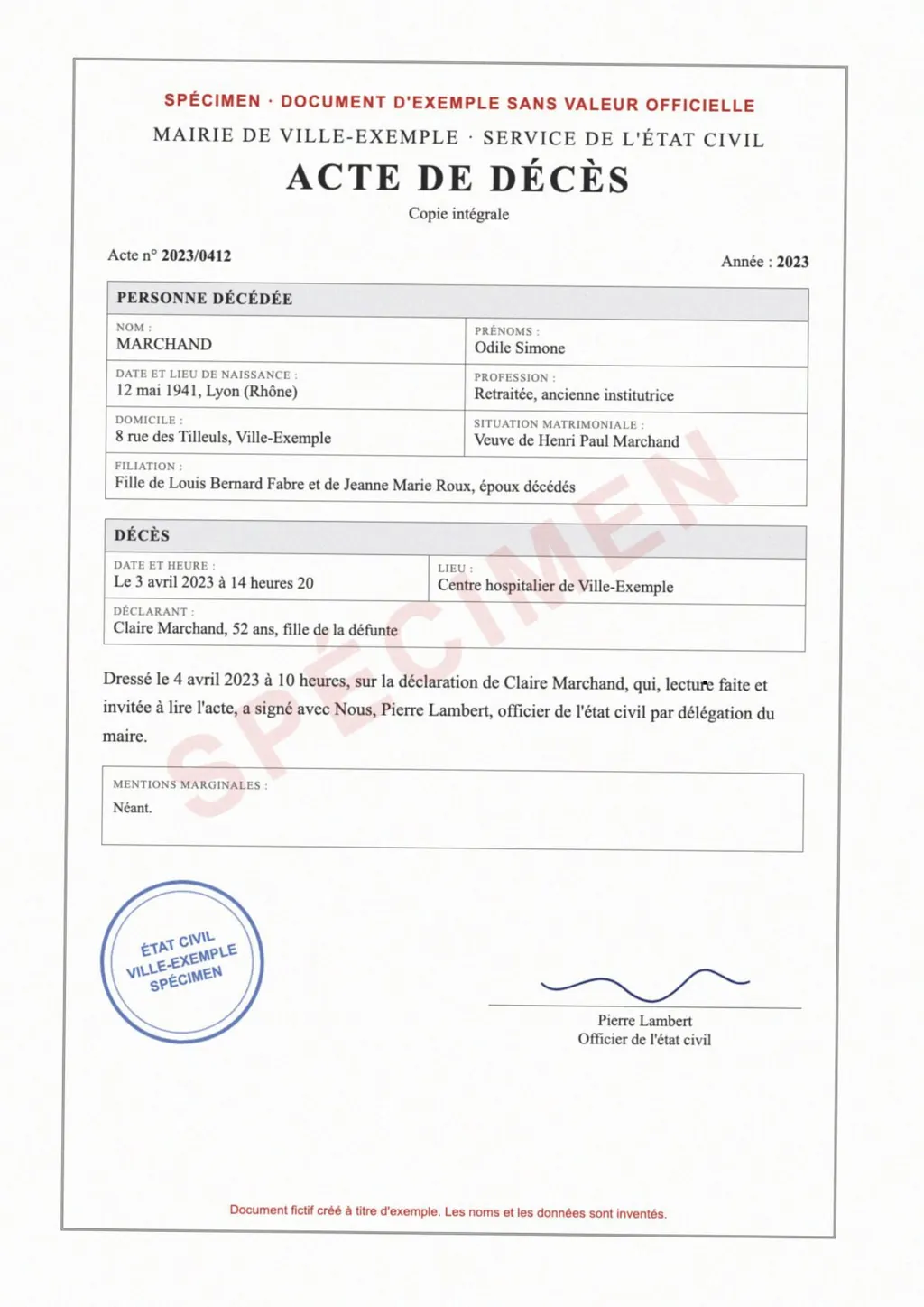
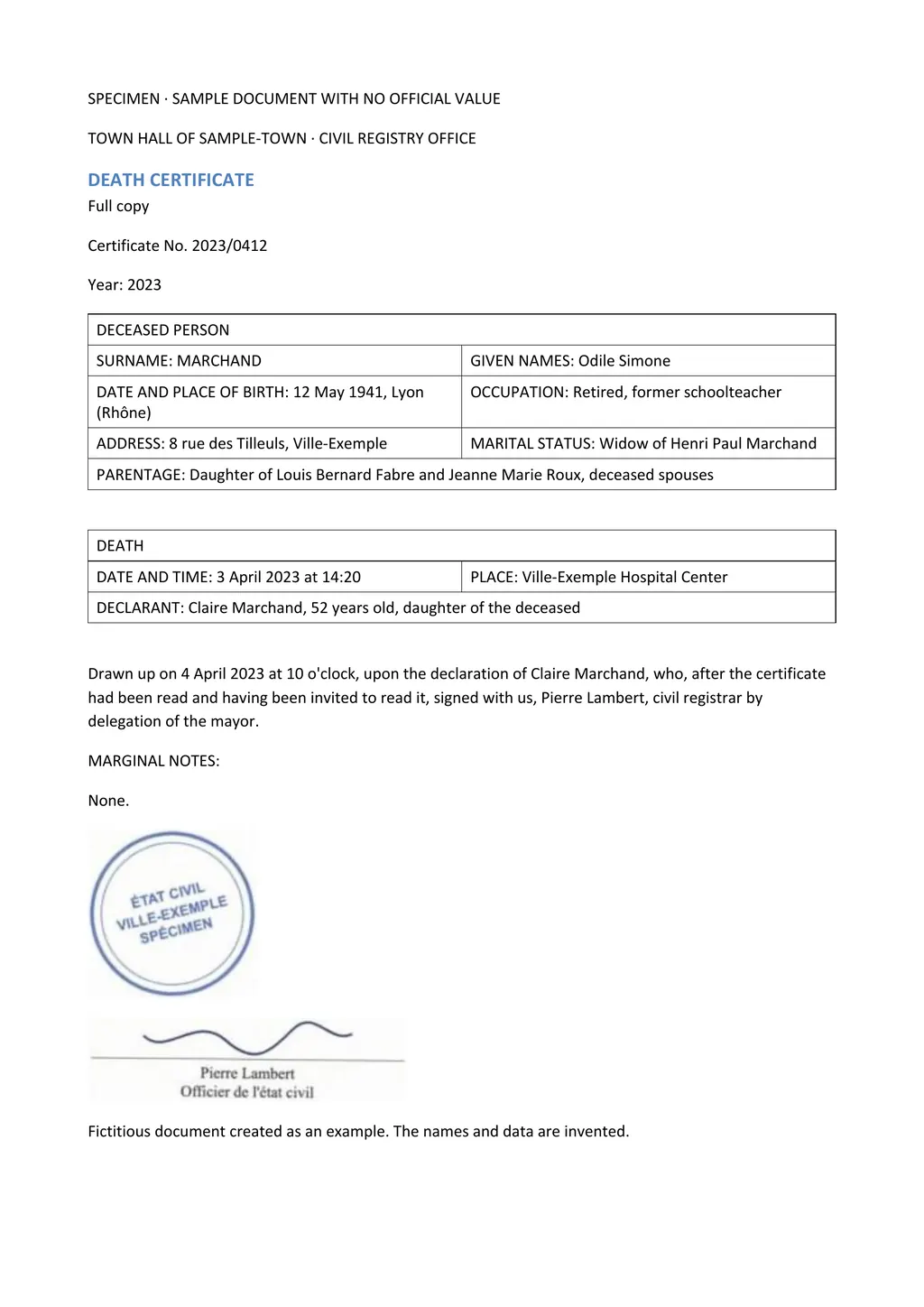
In the example above, LoreAI translated the town name Ville-Exemple as Sample-City in the header but kept it in French everywhere else. Keep place names in their original form throughout.
Insurers and courts sometimes want a translation from a professional translator. Ask before you submit, and use LoreAI's Word file as the draft they review.
Questions people ask
Who asks for a translated death certificate?
Probate courts, life insurers, banks and pension offices are the usual ones. Each sets its own translation rule, so ask before you submit.
Can LoreAI translate handwritten causes of death?
It reads clear handwriting. Doctors' handwriting is often hard to read, so check that part carefully and mark anything unclear as [illegible].
Is the translation certified?
No. LoreAI writes the translation, and a person signs the certification.