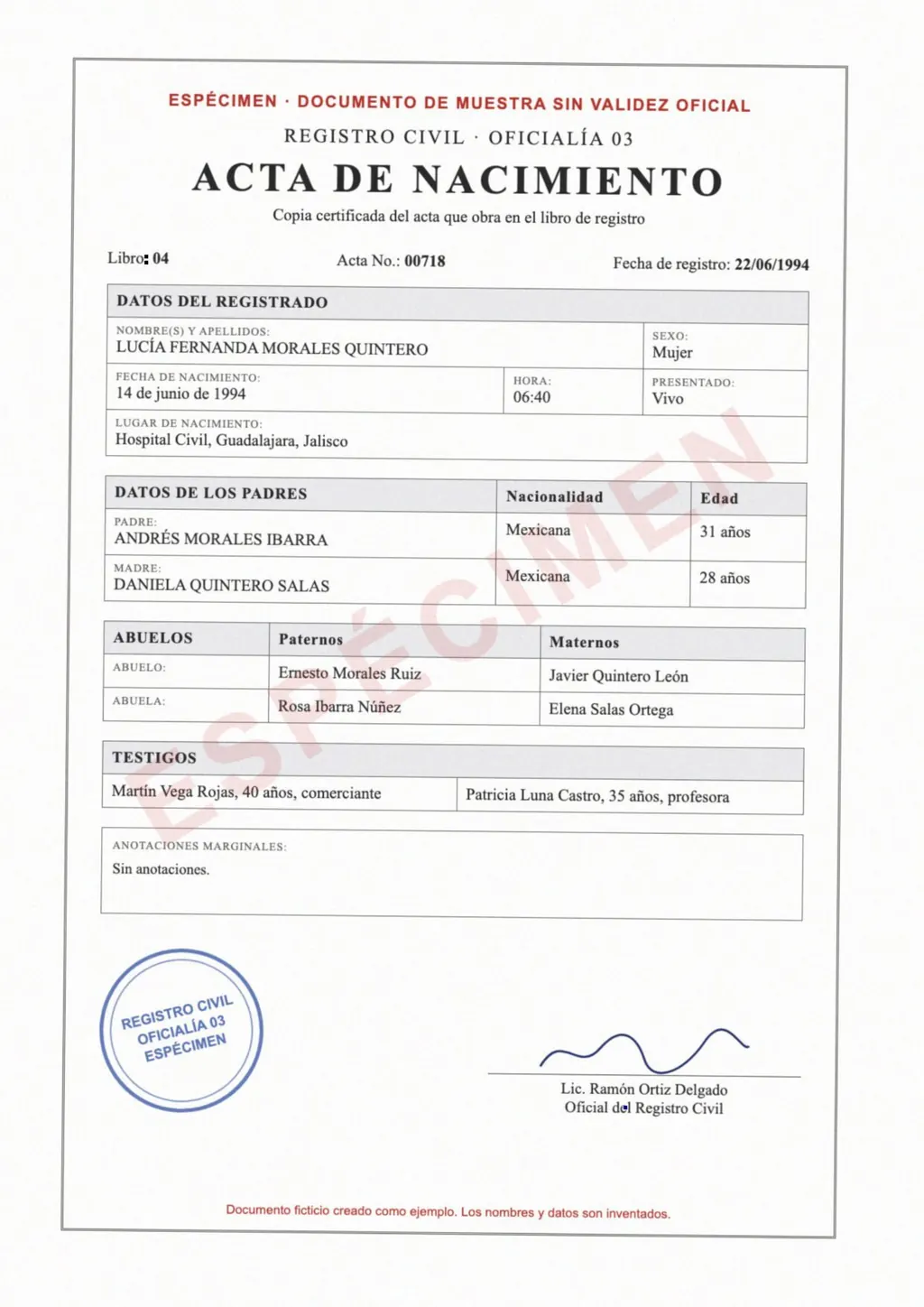
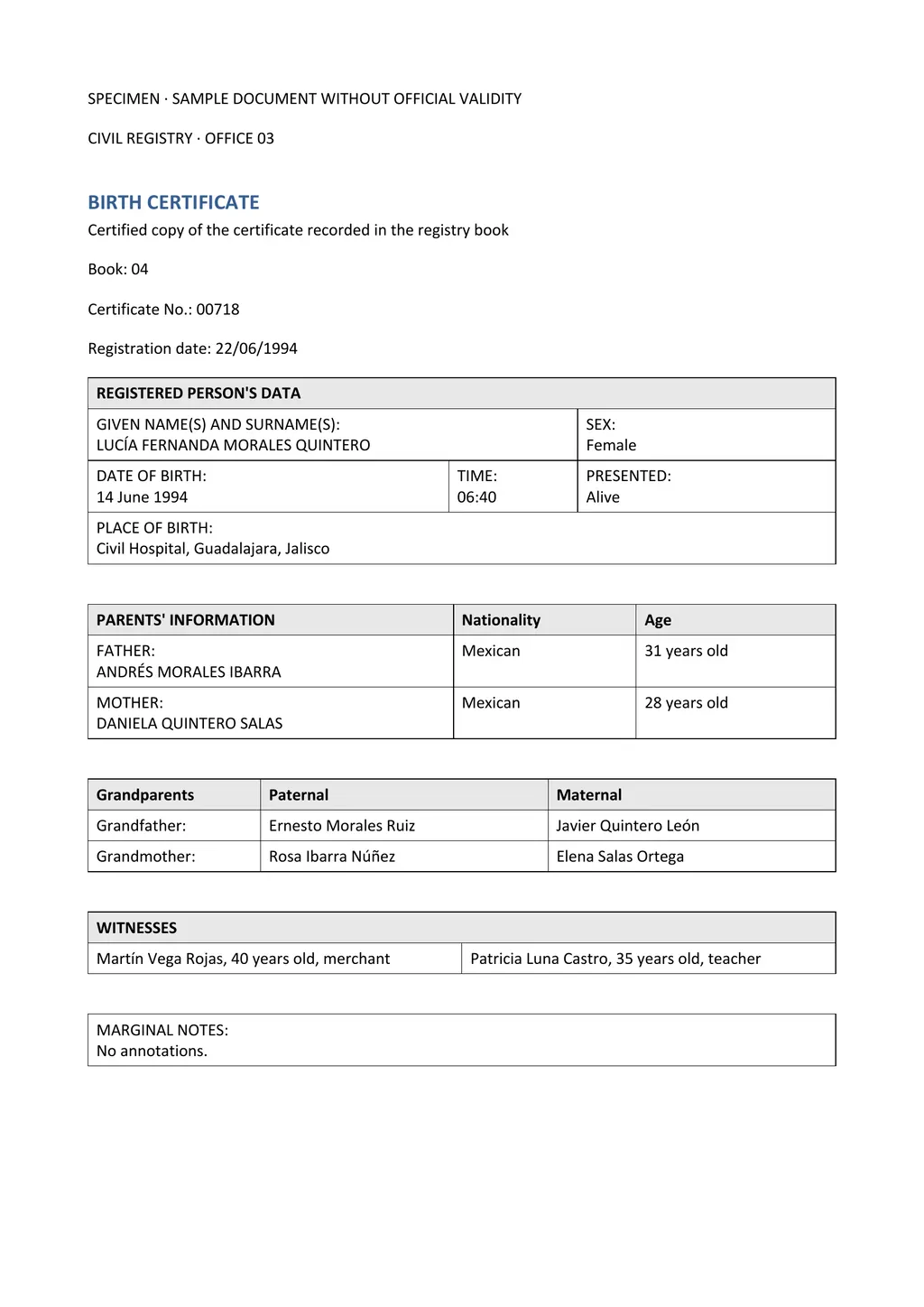
The rule, word for word
USCIS translation requirements come from 8 CFR 103.2(b)(3):
Three things follow from that sentence. The translation has to be full, so stamps, seals, handwritten notes and the back of the page count. The translator certifies two facts, accuracy and competence. And the rule says nothing about agencies, notaries or official seals.
What the translator's statement contains
The regulation sets the two facts to certify. USCIS form instructions add who must be named. The Form I-130 instructions, for example, say the certification must also include the translator's signature, printed name, the signature date and their contact information. Together, the statement carries:
- Competence
- That the translator is competent to translate from the source language into English.
- Accuracy
- That the attached English translation is complete and accurate.
- Document
- Which document was translated, for example the birth certificate of a named person.
- Translator
- Signature, printed name, the date of signing and contact information such as an address, phone number or email.
The certificate of translation template has this wording ready to copy or download as a Word file.
How to prepare a USCIS translation with LoreAI
- Scan every page of the document, including the back if anything is written or stamped there.
- Upload the scan to LoreAI and choose English as the target language.
- Open the Word file and check it line by line against the original. Add bracketed notes for seals, signatures and anything illegible, for example [illegible].
- Add the translator's certification at the end. The person who signs it must be competent in both languages and must have checked the translation.
- Submit a copy of the original document, the English translation and the signed certification together.
LoreAI does the slow part, typing the translation into a clean layout. The person who signs the certification still answers for it, so they should read the whole thing.
What LoreAI does not do
LoreAI is a translation tool, not a certified translation service. It does not sign the certification, does not notarize anything and cannot promise that USCIS will accept a filing. If you would rather not sign yourself, ask a bilingual person you trust or a professional translator to review the Word file and sign.
Questions people ask
Does USCIS require a professional translator or an agency?
No. In a 2018 letter, USCIS wrote that it does not require individuals to use a professional translation service, only that the people doing the translations certify their competency to translate into English.
Does a USCIS translation need to be notarized?
Neither 8 CFR 103.2 nor the I-130 and I-485 form instructions mention notarizing translations. Other receivers sometimes ask for it.
Can I translate my own documents for USCIS?
The regulation does not say who the translator may or may not be, and USCIS has not published a rule on self-translation. To avoid questions about bias, have someone other than the applicant check and sign if you can.
Do I send the original document?
The I-130 and I-485 instructions ask for legible photocopies unless the instructions say to send an original, and USCIS can ask for the original at any time. Send a copy of the foreign document with the translation and the certification.
Can the translation summarize the document?
No. The rule asks for a full translation, and the USCIS Policy Manual says a summary prepared by a translator is unacceptable. Translate everything on the page, including stamps and notes.