What does an apostille certify?
An apostille certifies where the document came from. Under Article 5(2) of the Convention, it certifies the authenticity of the signature, the capacity in which the signer acted and, where there is one, the seal or stamp[1].
The Handbook adds that an apostille does not relate in any way to the content of the document[1]. So an apostille on a birth certificate says the registrar's signature is real. It says nothing about whether a translation of that certificate is correct.
Do you translate the apostille or only the document?
Under the Convention, the apostille itself needs no translation. The Handbook says an apostille may not be rejected only because it is in a language other than that of the country of destination, and that an apostilled document is exempt from further formality, including translation, under Article 3(1)[1].
The document is another matter. The same paragraph says the destination country can still reject the underlying document under its own law because it is in another language or has no translation[1]. In practice, translate the whole page, apostille included, so the office never has to ask.
USCIS requires a full English translation of any document containing foreign language[4]. A foreign birth certificate with an apostille in Spanish therefore needs the apostille translated too.
Which comes first, the apostille or the translation?
It depends on whether the receiver wants the apostille on the original, on the translation, or on both. There are four routes, and the Handbook describes the last three[1]:
- Apostille on the original only. You get the apostille first, then have the document and the apostille translated together.
- Apostille on the translation. Where a translation is not itself a public document, the translator swears an affidavit of accuracy before a notary, and the notarial certificate gets the apostille.
- A translation certified by an official authority, whose certificate then gets the apostille.
- In some countries, a translation by a sworn or accredited translator is already a public document and can be apostilled as it is.
Ask the receiving office which one it wants before you start. If it wants route 2 or 3, the translation has to exist before the apostille, so it comes first. If it wants only route 1, apostille first.
Does the translation itself need an apostille?
Only if the receiver asks for it. In the US, this usually involves a notary. The Texas Secretary of State, for example, authenticates a translation only if it includes the translator's statement with a properly notarized signature and a copy or the original of the translated document[3]. See notarized translation for how that statement is made.
Where to get an apostille in the US
A state's secretary of state handles its own public records, according to the Texas, New York and California pages[3][5][6]. Federal documents go to the US Department of State[3].
- New York documents
- The Department of State apostilles documents signed by a New York State official or county clerk, at $10 per document[5]
- California documents
- The Secretary of State apostilles documents signed by a California public official or original notarized documents, at $20 per apostille[6]
- Texas documents
- The Secretary of State apostilles only Texas public records[3]
- Federal documents
- FBI background checks and naturalization certificates go to the US Department of State's Office of Authentications[3]
- Notarized documents in New York
- First certified by the county clerk of the county where the notary is certified to notarize[5]
Each state's office sets its own fees and steps, so check the page of the state that issued your document. California does not accept photocopies[6].
Steps for a US document going abroad with a translation
- Ask the receiving office what it wants. Apostille on the original, on the translation, or both, and whether it needs a sworn translator from its own country.
- Get a certified copy of the document. Order it from the office that issued it, such as the state vital records office for a birth certificate.
- Get the apostille on the original, if the receiver wants it there. From the secretary of state of the issuing state[3][5][6], or from the US Department of State for a federal document[3]. If the receiver wants the apostille on the translation instead, skip this step. The translation gets its apostille after the certification in step 5.
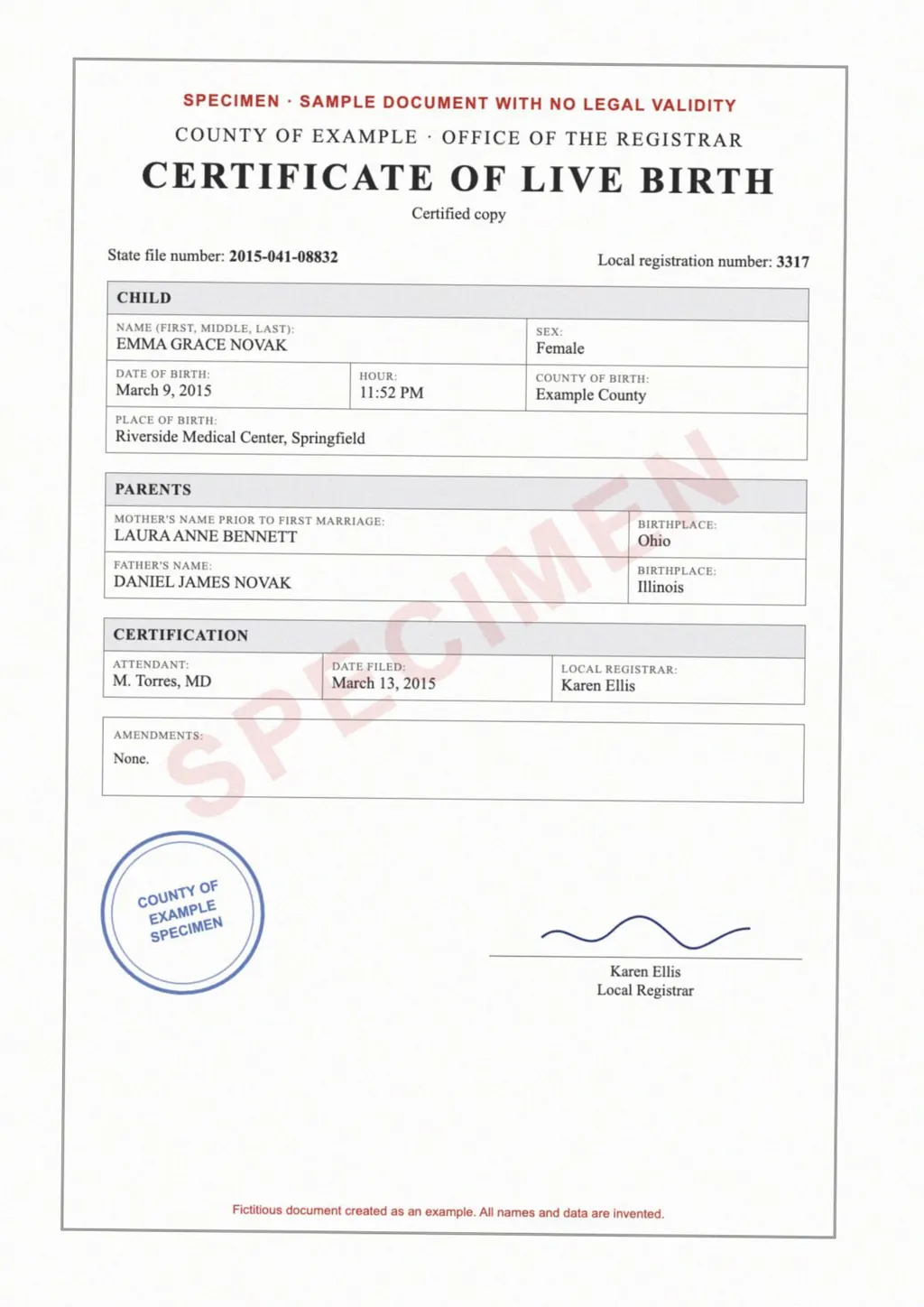
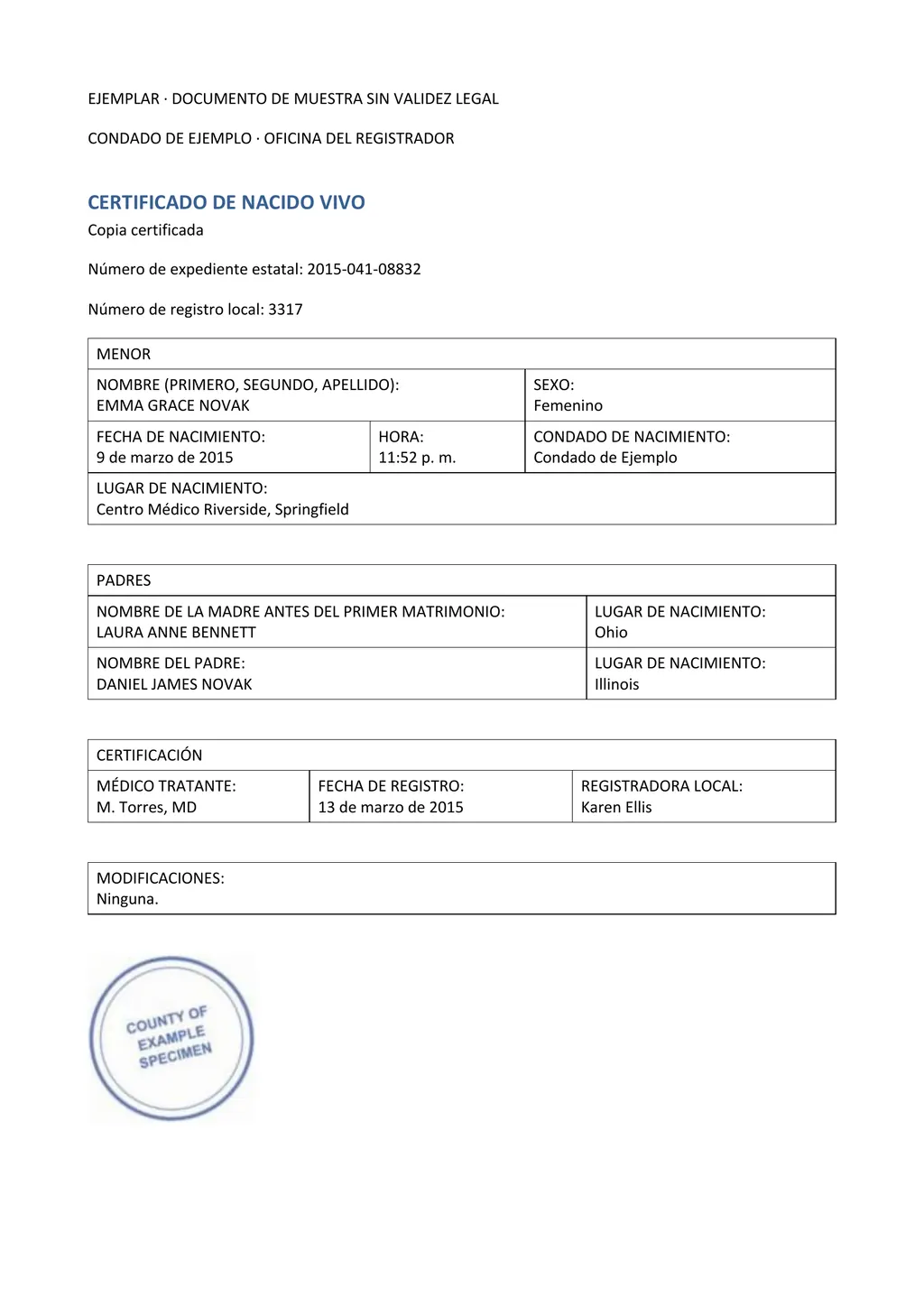
- Make the translation. Upload a scan of the document, with its apostille if it has one, to LoreAI and download the Word file. The translator checks it against the original and corrects it.
- Certify, and notarize if asked. The translator signs the statement. If the receiver wants the translation apostilled, the signature is notarized and the apostille goes on the notarial certificate[1].
Where LoreAI fits
LoreAI does not issue apostilles and is not a certified, notarized or sworn translation service. It uses OCR to read the scanned document and apostille, then returns an editable Word file in the same layout. Names, dates and numbers stay as written. The translator checks the file before signing.
Your first document is free, up to 3 pages. For birth certificates, see birth certificate translation and certified birth certificate translation.
Questions people ask
Does the apostille need to be translated?
Do I apostille the translation or the original?
Whichever the receiver asks for. A translation can be apostilled through a notarized translator's affidavit or an official certification[1].
Who issues apostilles in the US?
Does an apostille prove the translation is correct?
No. An apostille does not relate in any way to the content of the document[1].
Sources
- HCCH Apostille Handbook, paragraphs 24, 25, 195 to 197 and 312 to 313 (PDF), accessed November 2, 2026
- HCCH: Apostille Section, accessed November 2, 2026
- Texas Secretary of State: Apostille and authentication of documents, accessed November 2, 2026
- 8 CFR 103.2(b)(3), Translations, Electronic Code of Federal Regulations, accessed November 2, 2026
- New York Department of State: Apostille or certificate of authentication, accessed November 2, 2026
- California Secretary of State: Apostilles, accessed November 2, 2026
By Matt Mountain ·